Europe with kids · Part 1
One pram or two? The question I'm stuck on
We're two years out from taking a four-year-old and a baby to Europe, and I've spent an embarrassing number of evenings thinking about wheels.
Fair warning: this post has no answers in it. I haven't done this trip yet. It's a list of what I've worked out so far and everything I'm still stuck on — and if you've done it, I'd really like to hear from you.
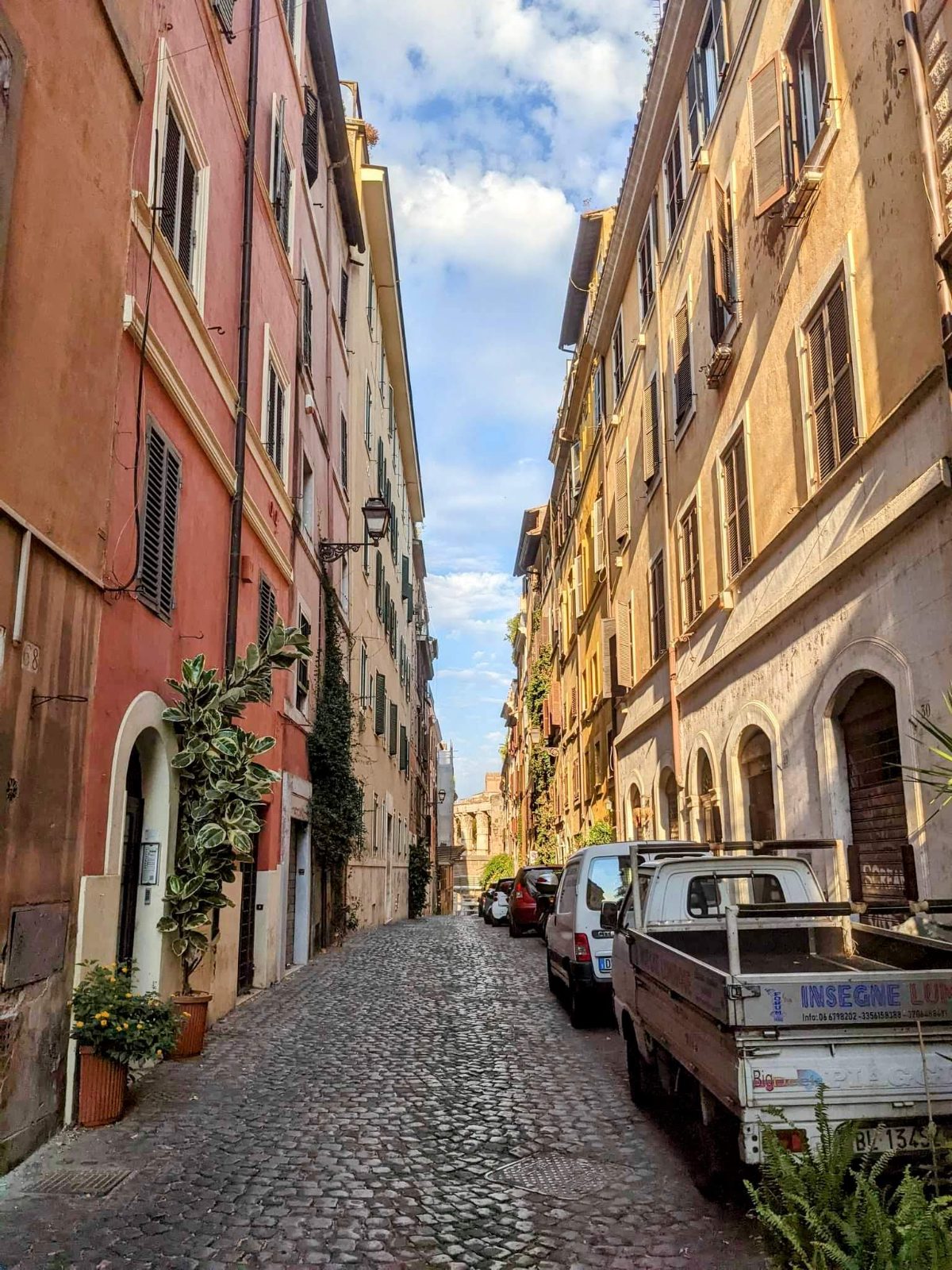
Beautiful. Absolutely not designed with wheels in mind.
Here's a thing nobody warns you about when you start planning a big family trip: you spend far less time daydreaming about the destination than you do worrying about logistics you'd never previously considered.
I've got two years before we go. The points are nearly sorted. The route is decided. And the thing keeping me up is a pram.
Where we're actually at
The plan is Europe in 2028, mostly Malta, where my family lives. We'll stay with them for the bulk of it, which takes a lot of pressure off — but we'll also travel around a bit, and that's where accommodation and logistics get real.
By then our son will be four, nearly five. And we're hoping there'll be a baby too, who'd still be under two.
So: one adult-sized-ish child who can walk but not endlessly, and one who can't walk at all. In cities built several centuries before anyone thought about wheels.
I should say plainly — I've never been to Europe with children. I've been plenty of times without them, and I've always loved that you walk everywhere. That's exactly the bit I'm now nervous about.
What we've got now, and what we know it can do
Our only real data point is Fiji.
We flew there with our son when he was smaller — four or five hours — and took our Baby Jogger, which has since become our everyday pram. Honestly, it was great. It's compact, it opens and closes easily, it came with a travel bag, and we could take it on the plane and put it in the overhead locker rather than gate checking it.
Having it with us on the plane made a genuine difference. No waiting at the carousel, no wondering if it had been damaged, and something to put a tired child in the second we landed.
But Fiji is not Rome. Four hours is not twenty-four. And a smooth resort path is not a cobbled street in a hill town.
The pram that's perfect for our life right now might be completely wrong for the trip we're planning.
The questions I'm stuck on
- Does a four or five-year-old still need a pram? He'll be well past pram age at home. But we're talking about days of walking, jet lag, and a lot of standing around looking at things he doesn't care about.
- If he does, is that two prams, or one double? Two singles means two adults each pushing one, which sounds unmanageable the moment one of us needs to carry a bag.
- Is a double pram even practical in Europe? This is the one I keep circling. Narrow footpaths, narrow doorways, old buildings.
- Is there an option I haven't thought of? Because I suspect there is, and I suspect somebody reading this knows what it is.
What I've found so far
To be clear, this is research, not experience. I've been reading forums and blogs written by people who've actually done it, and a few consistent themes come up.
Side-by-side doubles are the wrong answer
This came up again and again. Side-by-side doubles are reportedly a real struggle on narrow European footpaths and through narrow doorways. Inline or tandem doubles cope far better with tight spaces — though they're longer, and heavier to lift.
The buggy board might be the thing
This is the option I hadn't considered, and it's the one I keep coming back to: a board that attaches to the back of a single pram, so an older child can hop on when they're tired and hop off when they're not.
One pram. Baby in the seat. Four-year-old riding on the back when his legs give out. It's the only solution I've read about that doesn't involve buying something enormous.
Wheel size matters more than I realised
The consistent warning is that small-wheeled umbrella strollers take a battering on cobblestones — some people report cheap ones simply breaking. Bigger wheels handle uneven ground far better.
But here's the trade-off, and it's a real one:
| Compact travel pram | Bigger-wheeled pram |
|---|---|
| Fits in the overhead locker — you keep it through layovers and have it the moment you land | Must be gate checked, so you're without it in transit |
| Light enough to carry up stairs with a child in it | Heavier, and Europe has a lot of stairs |
| Rougher ride on cobbles; small wheels can suffer | Handles cobbles, gravel and uneven footpaths far better |
| Easier in restaurants, trains and taxis | Bigger basket, which apparently matters more than you'd think |
Our Baby Jogger sits on the compact end of that table. Which is either exactly right or exactly wrong, and I genuinely can't tell yet.
A carrier as backup
Several people mentioned a carrier or backpack carrier as the thing that saves you — for stairs, for museums, for the streets too narrow for anything with wheels. Not instead of a pram. Alongside it.
You can rent at the destination
I hadn't thought of this at all. Some places rent prams, which would mean travelling light and picking something up locally. I don't know how practical that is when you're moving between countries, but it's on the list.
What we're using
The pram, and everything else we travel with
I'm still working the pram question out in public. The things we already own and rely on — the carrier, the travel bits, what actually survives an airport — are listed here, and I update it as we decide.
See what we use →Some links on that page may earn me a small commission at no extra cost to you. I only list things I actually own and use, and nothing is there because someone paid for it.
And then there's the flight
The pram is honestly the smaller worry.
Sydney to Europe is over twenty hours in the air, and considerably more door to door once you add stopovers. Our longest with a child is five.
We've deliberately built the route with a stopover so it's broken up rather than done in one brutal push. I've read about bassinet seats and know they need to be requested as early as possible. Beyond that, I'm working on the assumption that some portion of it will simply be unpleasant and we'll get through it.
That's a whole separate post, and I'll write it when I know more.
Where I'd really like some help
This is the part of planning nobody posts about, because it isn't photogenic. It's just a lot of open tabs and a nagging feeling you're about to spend money on the wrong thing.
So if you've taken a small child and a baby around Europe:
- Did your four or five-year-old actually need a pram, or did they cope?
- Buggy board — brilliant, or a gimmick?
- Did you regret the pram you took?
- Is there an obvious option I've completely missed?
I'll report back as I work it out. That's rather the point of this whole thing — I'd rather document the figuring-out than pretend I turned up with it all sorted.
Questions I've been asked
Do you need a pram in Europe for a four-year-old?
It depends on the child and how much walking you're doing. Plenty of parents report a four or five-year-old doesn't need a full pram seat but does need somewhere to rest on long days. A buggy board on a single pram is the common compromise.
Is a double stroller practical in Europe?
Side-by-side doubles are widely reported as difficult on narrow footpaths and through old doorways. Inline doubles cope better with tight spaces, but they're longer and heavier on stairs.
What kind of pram handles cobblestones best?
Larger wheels, consistently. The trade-off is that bigger prams generally can't go in an overhead locker and need gate checking.
Can you take a pram on the plane?
Compact travel prams can often go in the overhead locker, which means you keep it through layovers. Larger ones are gate checked at the aircraft door. Policies vary by airline — check before you book.
Been to Europe with little ones? Tell me what worked — I'm all ears.