Points
We paid for our wedding in cash and earned points on all of it
Thirty guests, a resort in Fiji, and roughly $32,600 of our own money going out the door. Here's what it earned — and the rule I didn't know about that cost me thousands.
Not financial advice — I'm not an adviser, just someone who reads terms and conditions and shows her working. Card terms change, and the figures below are my own reconstruction from statements rather than an official statement of earnings.
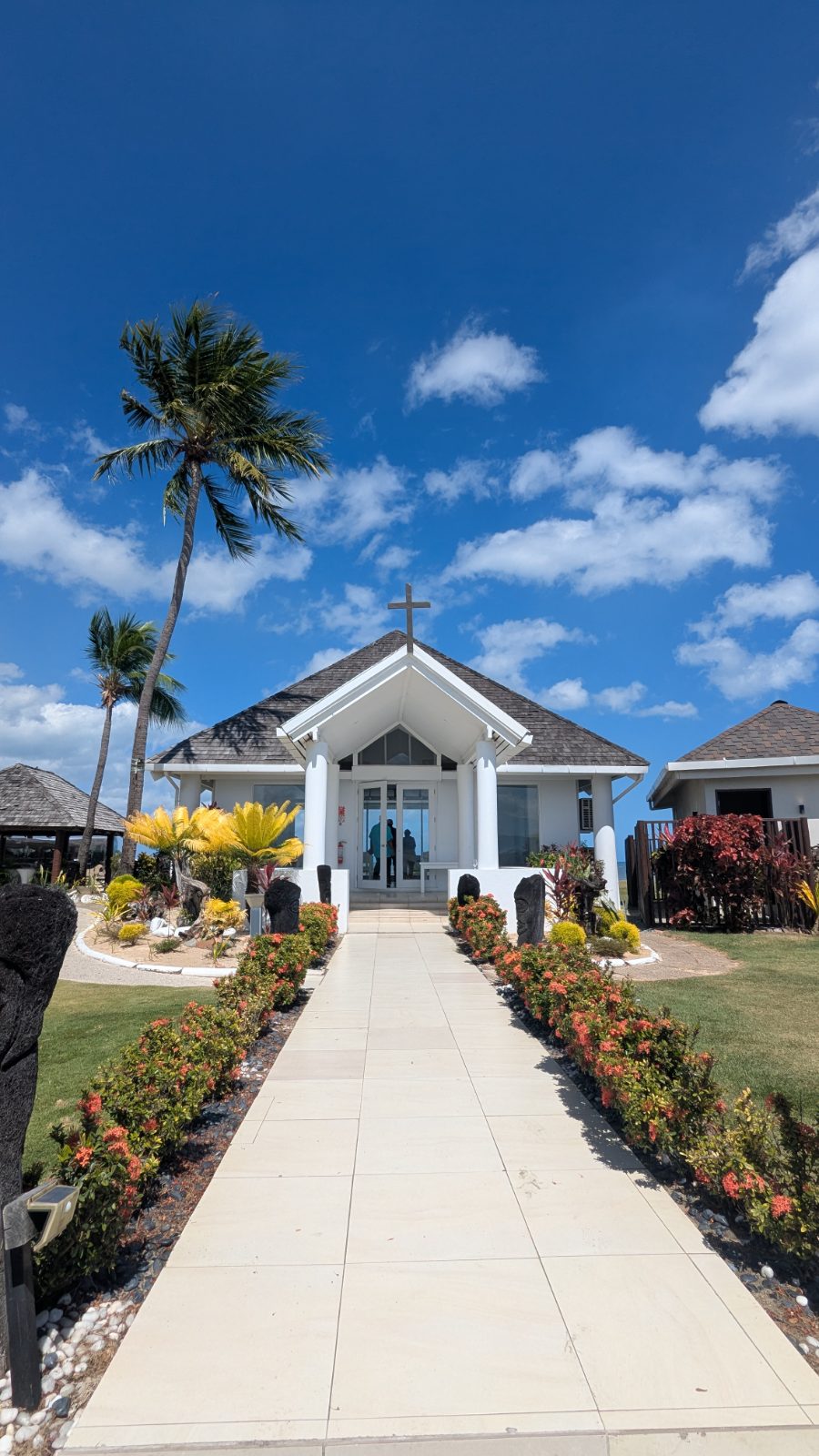
Sheraton Fiji, 18 September 2025
We got married at the Sheraton Fiji Golf & Beach Resort on 18 September 2025. Thirty guests, a wedding package that came to around $22,600, a week of resort incidentals, suits, jewellery, car hire, and then an extra week afterwards at the Mercure down the road once everyone had gone home.
All up, roughly $32,600 came off our card that nobody paid back.
And I didn't redeem a single point against any of it.
The decision not to redeem
This is the part people find odd, so let me explain it.
We were already deep into saving for something much bigger — the family trip to Malta in 2028, which needs 456,600 points. I wasn't about to raid that balance for a wedding we'd always planned to pay for in cash.
So I flipped the question. Instead of asking how do I spend points on this?, I asked how do I earn the most points from money that's leaving my account regardless?
Every dollar going out the door anyway is a dollar that can still work for the next trip.
A destination wedding is probably the biggest concentrated spend most people will ever make outside a house or a car. It seemed mad not to make it count.

Why the category mattered more than the card
Everything went on our CommBank Ultimate Awards card. The rates that mattered:
- 3 Awards points per $1 on international transactions — anything charged overseas, or online where the merchant processes payment overseas
- 2 points per $1 at Australian supermarkets, department stores, petrol, dining and utilities
- 1 point per $1 on everything else
That international rate is what made this worth tracking, and here's the bit I want to stress: I didn't do anything clever to get it.
The resort billed in Fijian dollars. The car hire was Fijian. My jewellery came from an overseas seller. All of that is automatically an international transaction — no portal, no promo, no timing. I just paid with the card I already had, and the currency did the work.
The card also charges no international transaction fees, which on roughly $29,000 of foreign-currency spend saved us somewhere around $870 against a typical 3% fee. Honestly, that may have been worth more than the points.
Where the points actually came from
International — 3 points per $1
| What | Amount |
|---|---|
| Sheraton wedding package (deposit + balance) | $22,643.08 |
| Sheraton incidentals during the week | $2,878.90 |
| Mercure Nadi — our extra week | $1,722.00 |
| Nadroga car hire | $1,264.23 |
| Jewellery, overseas seller | $411.00 |
| Subtotal | $28,919.21 |
Everything else — 1 point per $1
| What | Amount |
|---|---|
| Suits — groom and groomsmen | $2,794.80 |
| In-flight food | $364.50 |
| Airport parking | $281.06 |
| Airport transfers for family | $276.32 |
| Subtotal | $3,716.68 |

The gap between those two tables is the first lesson. The suits alone would have earned roughly 5,600 more points at the international rate — but groomsmen's suits aren't something you order from overseas, so there was nothing to be done. It's just a clean illustration of how much the category your bank files a transaction under changes what it's worth to you.
The cap I didn't know about
Here's the bit that stung, and the reason I rewrote this article after checking my own numbers.
I'd worked out my earnings by multiplying spend by the headline rates. Simple. Except those rates only apply up to $10,000 of spend in a statement period. Past that, the rate collapses to 0.5 points per $1 for the rest of that period — whatever the category, however international the transaction.
Reworking it properly, period by period:
| Period | Spend | Awards points |
|---|---|---|
| February — deposit | $10,518.60 | ~30,259 |
| July — suits, parking, transfers | ~$3,352 | ~3,900 |
| August — jewellery | $411 | ~1,233 |
| September — the wedding itself | ~$18,354 | ~34,177 |
| Total Awards points | ~69,500 |
At 2.5 Awards points to 1 Qantas Point, that's roughly 27,800 Qantas Points.
My first calculation had it at over 36,000. The cap cost me about 8,000 Qantas Points — and I only found it because I went back and checked rather than trusting my own arithmetic.
Splitting that September spend across two statement periods would have earned thousands more. Same money. Different fortnight.
We did split the wedding package into a February deposit and a September balance, which helped — two periods instead of one. It just wasn't enough, because each of those payments cleared $10,000 on its own.
What I'd do differently: ask the resort whether the balance could be paid in two instalments straddling a statement date. Not a discount, not a negotiation — just a payment date. Most venues wouldn't blink, and it's worth thousands of points.
Go and find your own card's cap before your next big purchase. It'll be in the terms, it won't be in the advertising, and it's the difference between the rate you think you're earning and the rate you're actually getting.
Where else I left money behind
The other one that annoys me: I booked our flights through Expedia without going through my cashback portal first.
Flights are exactly the sort of high-value booking where cashback is worth real money, and I simply didn't stop to check before paying. By the time I remembered, it was done.
Earning points on the card is one habit. Routing big purchases through a cashback portal before you pay is a completely separate habit, and clearly one I hadn't built yet. I'm not going into the cashback side in detail here — that's its own post — but I'm not going to pretend it went perfectly either.

If you've got a big spend coming
A wedding, a renovation, a medical bill, a car. Anything you were going to pay for regardless. Four questions worth asking before you pay:
- Is this an international transaction? If the merchant processes overseas, you may be on a much better rate without doing anything.
- What's my card's cap per statement period? Find the number. Then look at whether the payment can be split across two periods.
- Have I gone through a cashback portal? Before you pay, not after.
- Should I be redeeming here at all? Sometimes protecting a balance you're building for something bigger is the better call.
We didn't get a business class wedding out of this, and it isn't a redemption story. But about 27,800 Qantas Points came out of a trip we were paying for either way — and not one of them came out of the balance we're protecting for Malta.
Questions I get asked
Can you really earn points on a wedding?
Yes, and it's one of the largest concentrated spends most people ever make. Ours put around $32,600 of our own money through a rewards card and earned roughly 27,800 Qantas Points on spending that was happening anyway.
What's a statement period cap?
A limit on how much spend earns the headline rate each period. On our card, rates apply up to $10,000 per statement period, after which everything drops to 0.5 points per dollar. It's the single most overlooked term on a rewards card.
What counts as an international transaction?
Anything bought overseas, or bought online where the merchant or payment processor sits overseas — which can include sites that look thoroughly Australian.
Should you use points for a wedding?
Only if you don't have a bigger plan for them. We didn't, deliberately, because that balance was earmarked for Malta.
Got a big spend coming up? Check your cap before you pay. Learn from my $8,000-point mistake.